Start with the tools that change the shape
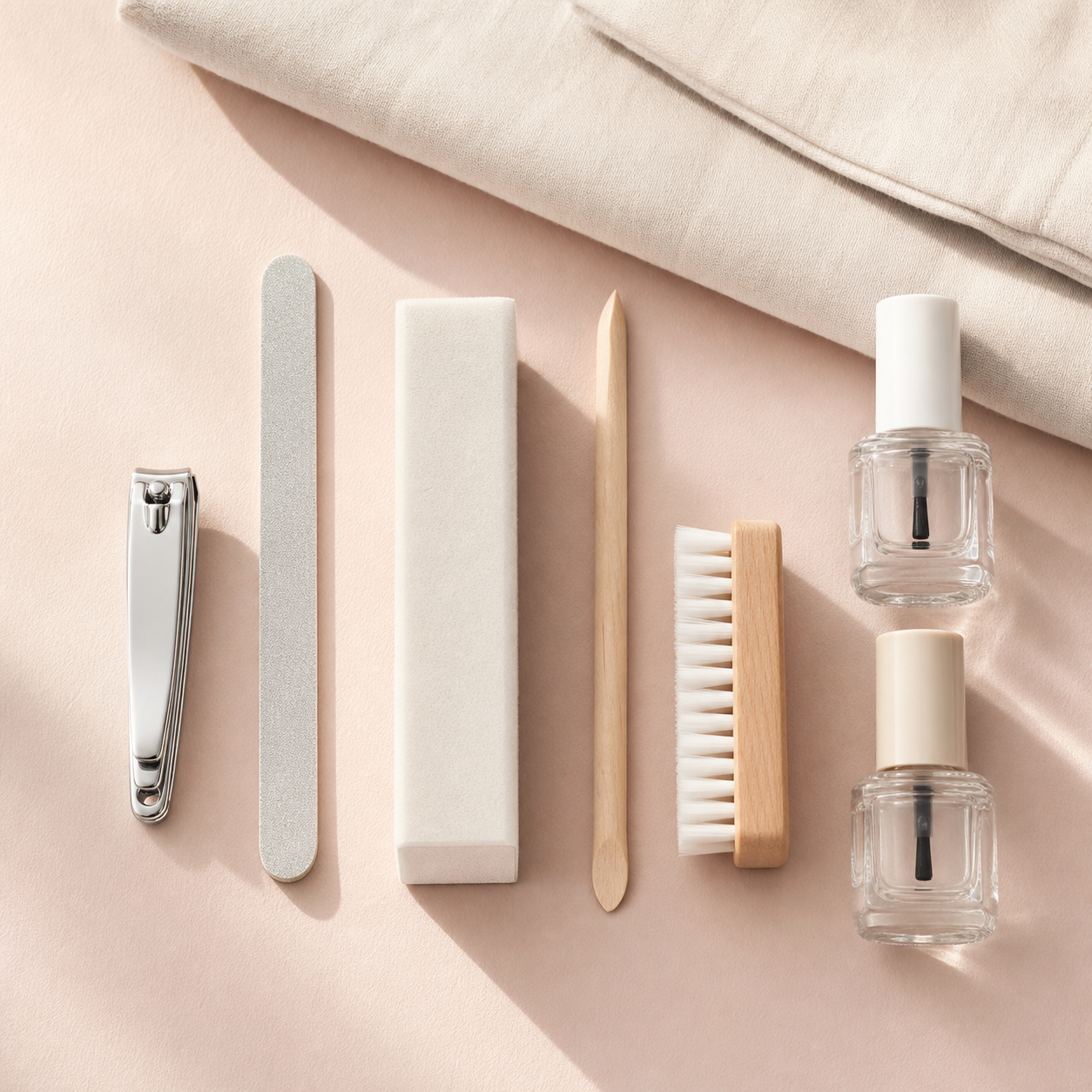
A sharp clipper, a fine-grit file, and a light buffer form the structural part of the kit. Clip only when significant length needs to come off, then file in controlled strokes to refine the edge. Sawing aggressively with a coarse file can leave thin nails feeling rough and vulnerable.
Buff sparingly. The goal is to soften a ridge or rough edge, not thin the entire nail plate until it shines. A block with clearly labeled sides helps keep the pressure and grit in proportion.
Treat cuticles as skin, not debris
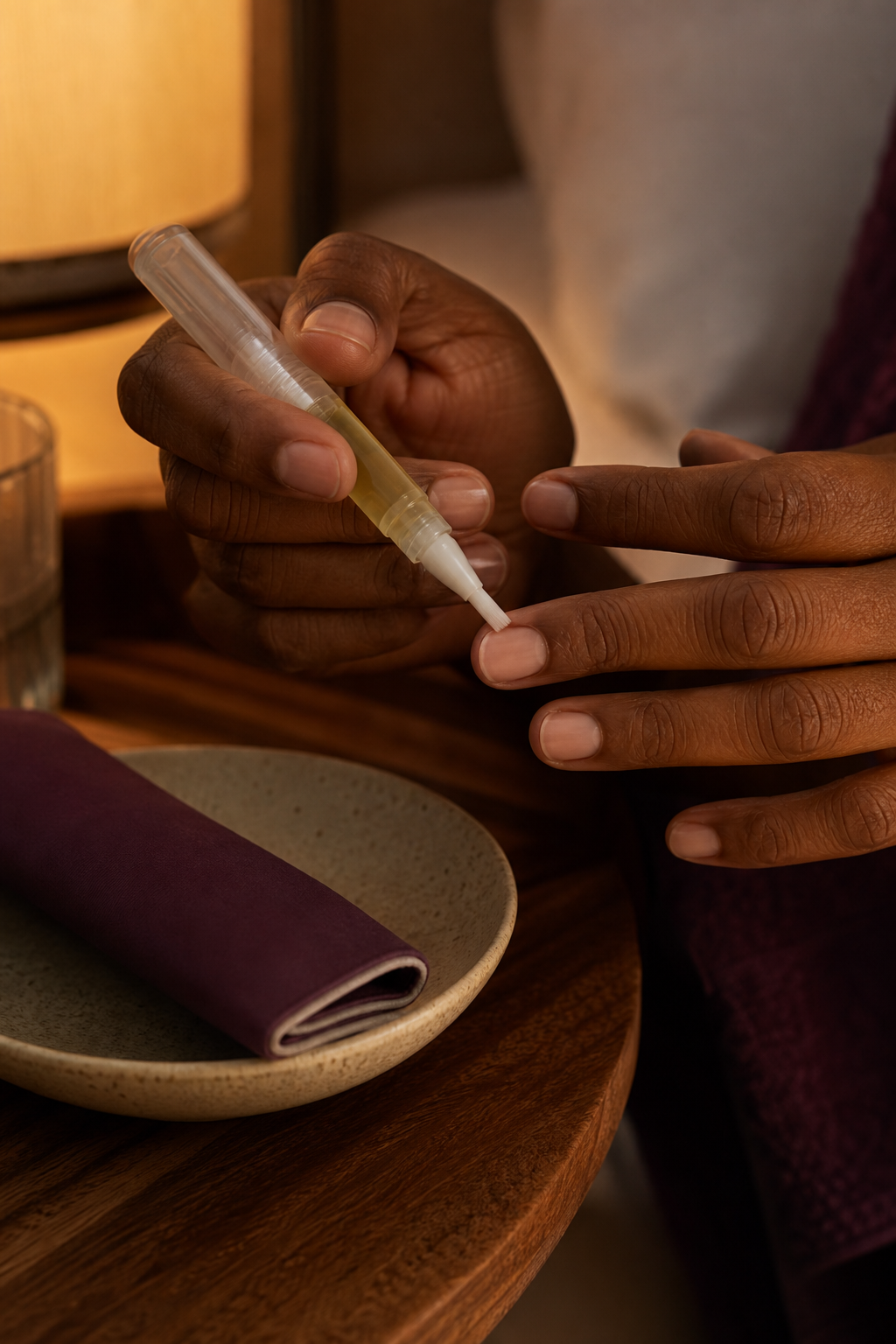
Soften the area after washing, then gently push back only what moves easily. Cutting live skin invites soreness and makes a home manicure feel more medical than relaxing. A wooden stick or rounded pusher is enough for most routines.
Keep a small brush for cleaning under and around the nail. Cleanliness improves the polish result without requiring sharp tools near delicate skin.
Polish in thin information-rich layers
Use remover or alcohol to clear oil from the nail surface, then apply a base coat, two thin color coats if needed, and a top coat. Thin layers dry more evenly and reveal whether the brush and formula cooperate with your technique.
Leave a narrow margin around the cuticle rather than flooding it. A small cleanup brush dipped lightly in remover can correct the edge before the polish sets.
The seven-piece edit
Keep a clipper, fine file, gentle buffer, wooden pusher, cleanup brush, base coat, and top coat. Add color and cuticle oil according to mood. A small kit stays useful because every object can be cleaned, replaced, and understood.