Shop for the finish, not the category
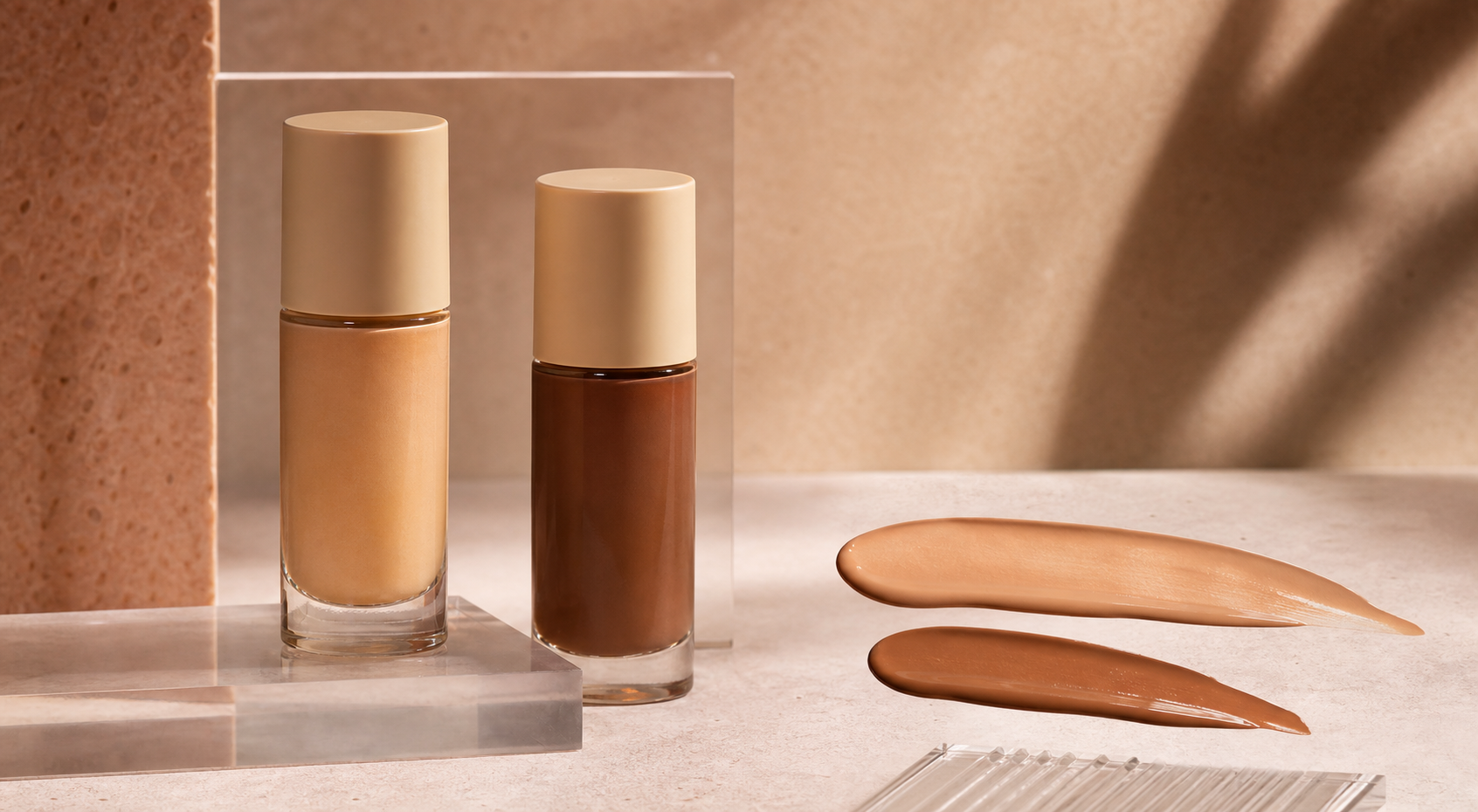
Skin tint usually signals light coverage and an easy, fluid texture. Foundation suggests a wider range of finishes and coverage levels. In practice, the border is porous. Some tints set firmly and some foundations are almost transparent. The label is a clue, not a guarantee.
Begin with the result you want. If freckles and natural variation should remain visible, look for sheer coverage with a flexible finish. If the goal is to soften redness across the face or create a more even canvas for long wear, a buildable foundation may offer more control with less product than repeatedly layering a tint.
Let application change the answer
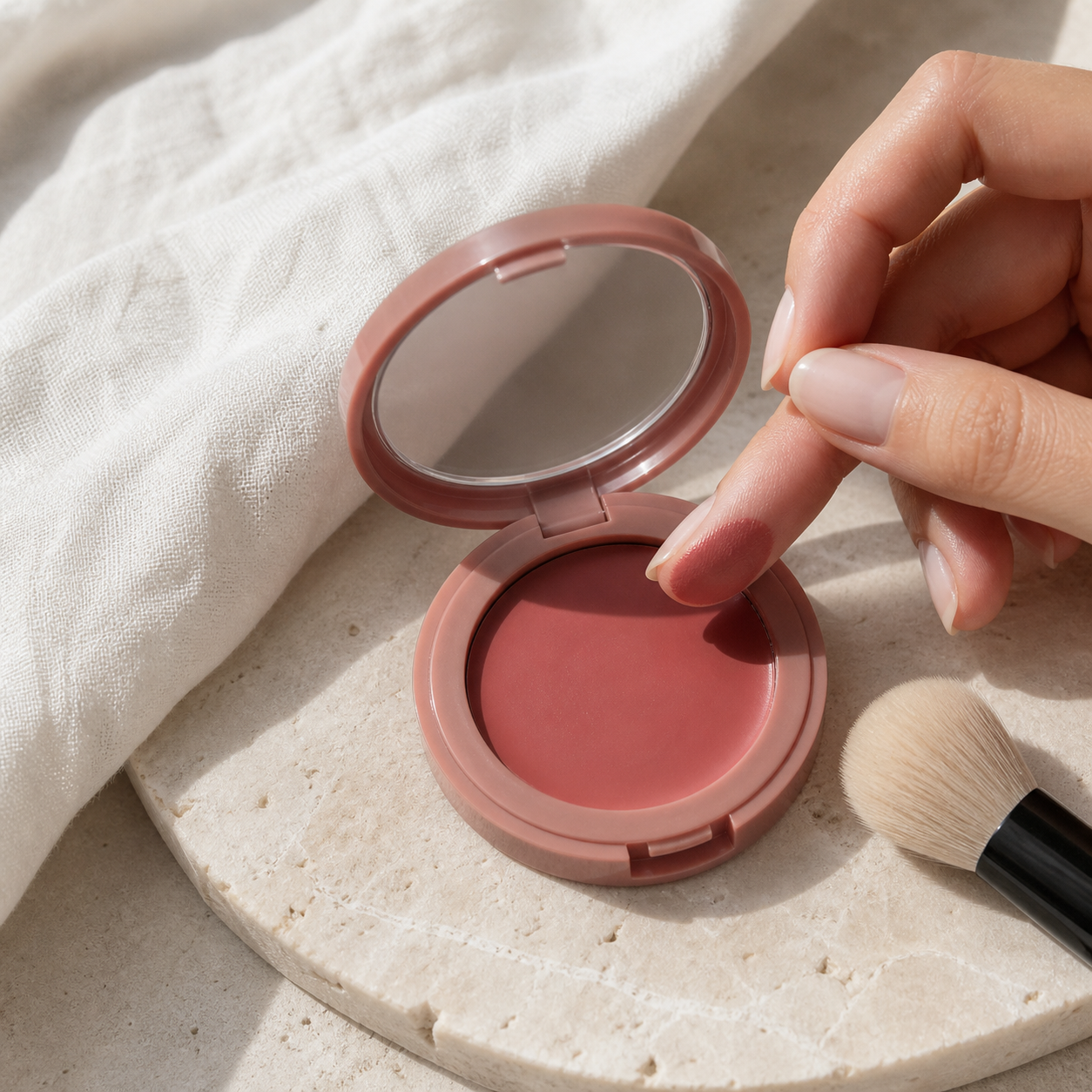
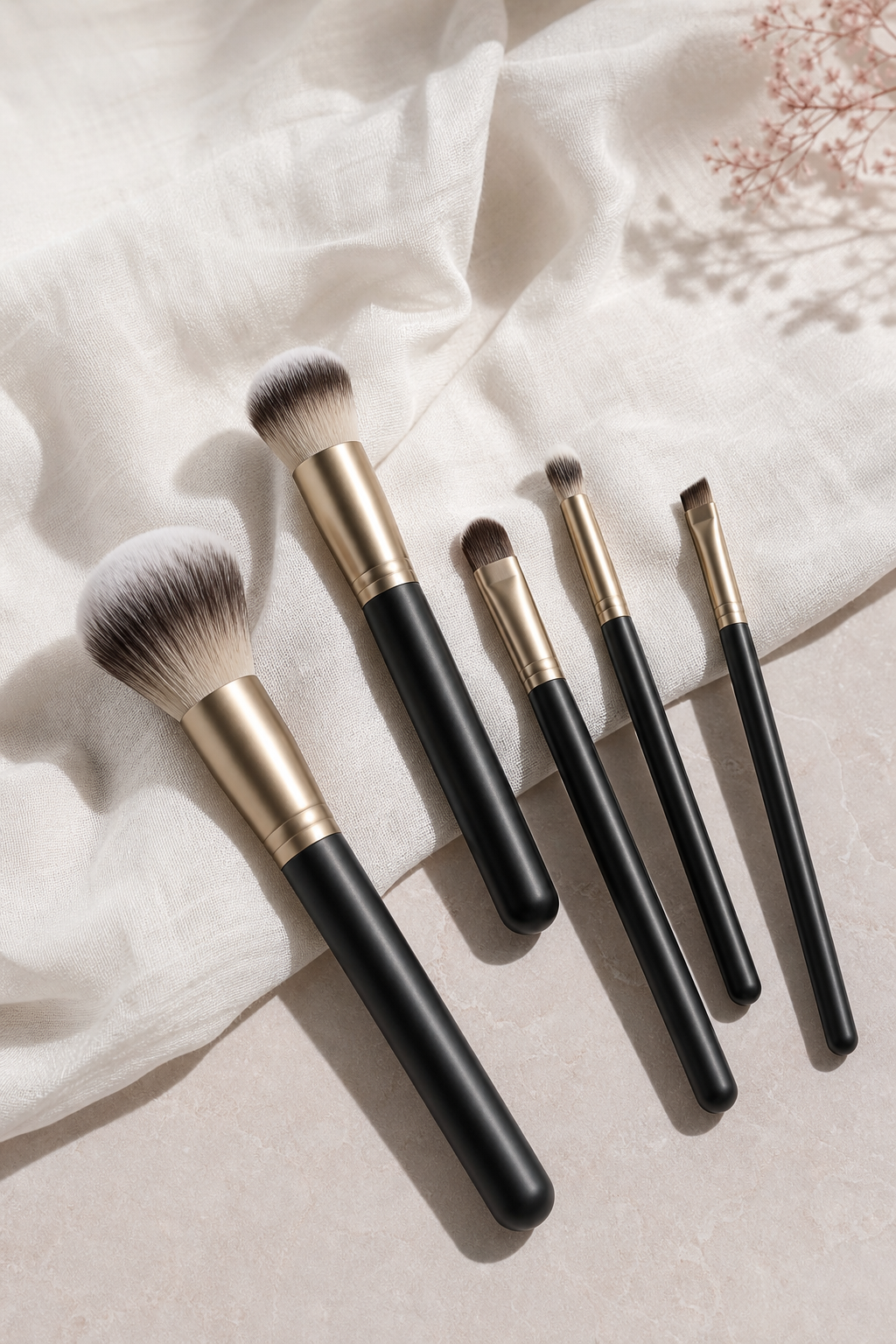
Fingers tend to preserve a skin-like finish and keep a fluid formula from disappearing into a tool. A damp sponge can soften edges and remove excess. A dense brush usually delivers more coverage. The same bottle can move between categories depending on how it is applied.
Use less than you think, then add only where the face asks for it. A thin base with targeted concealer often looks more effortless than a heavy layer chosen in the name of simplicity.
Check the routine underneath
Pilling is often a conversation between skin care and makeup, not a verdict on one product. Give sunscreen time to settle, avoid stacking several silicone-heavy layers without testing them together, and press rather than aggressively rub when the base begins to catch.
Oilier skin may prefer a tint that sets or a foundation with controlled shine. Drier skin may care more about flexibility around the mouth and eyes than the amount of coverage. A sample worn for a full day reveals more than a perfect store swatch.
The decision in one sentence
Choose a skin tint when speed and visible skin are the priority; choose foundation when adjustable coverage and finish matter more. Then ignore the category name if a formula from the other shelf gives you the result you wanted all along.