Diagnose the smudge
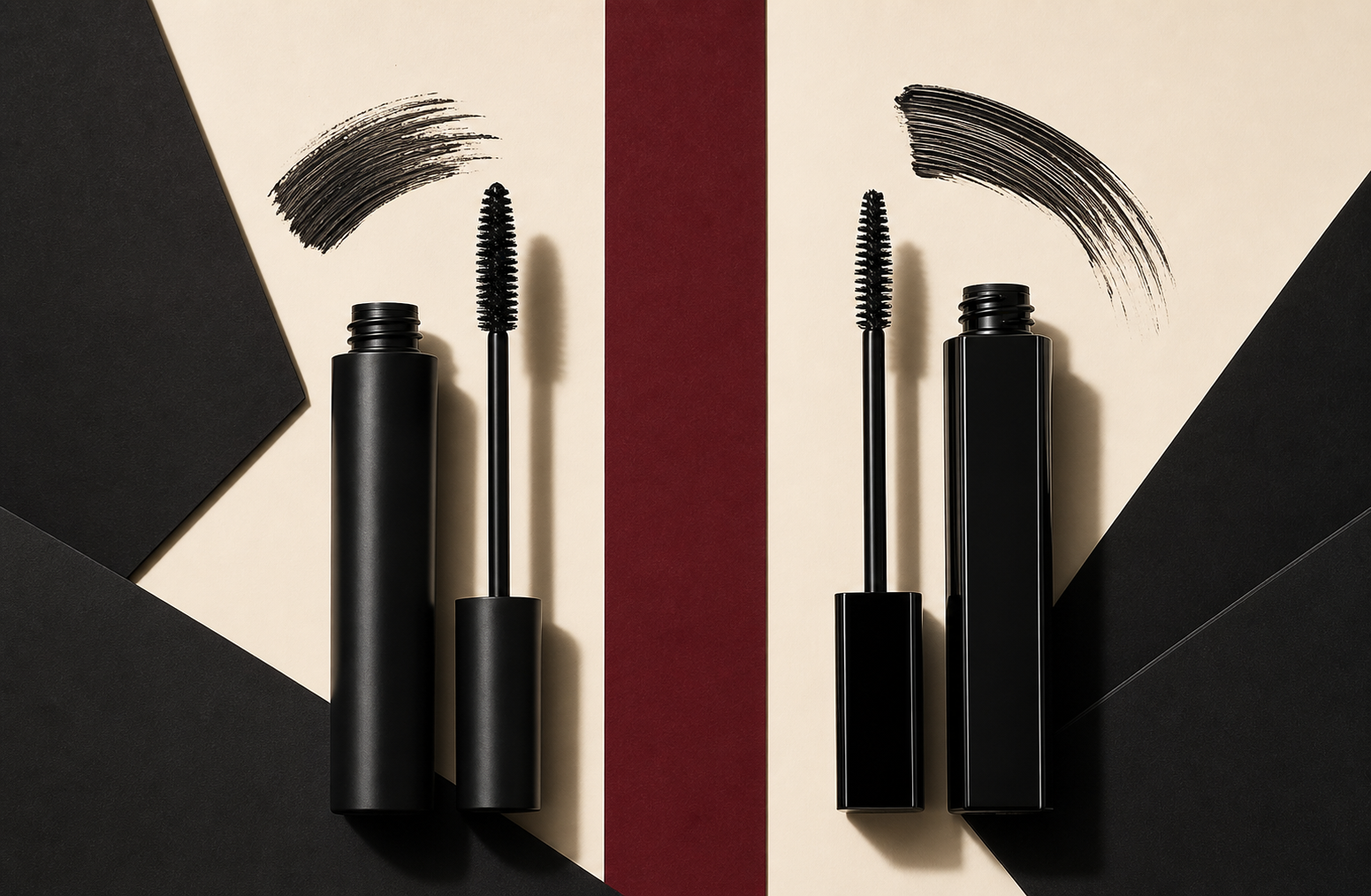
Mascara can fail through transfer under the eyes, flakes on the cheeks, a curl that drops, or removal that becomes a nightly argument. Tubing formulas form flexible sleeves around lashes and often release with warm water and gentle pressure. Traditional formulas rely on waxes, pigments, and film formers in many different combinations.
If your main problem is under-eye transfer from oil, humidity, or long wear, tubing is worth considering. If the priority is dense volume, dramatic layering, or a very specific brush effect, traditional mascara still offers the broadest range.
Application feels different
Tubing mascara often rewards a deliberate first coat because additional layers can become spidery once the tubes begin to set. Work from root to tip, combing through while the formula remains flexible. Traditional mascara may give more time for layering, though the exact behavior varies by formula.
Neither category automatically holds a curl. Straight lashes may still benefit from careful curling before application and a lighter coat that does not weigh down the shape.
Removal should be part of the review
The first tubing removal can be alarming because the product slides off in tiny lash-shaped pieces. That is the polymer, not your lashes, provided the process is gentle. Saturate with warm water, wait, and use light pressure rather than pulling.
Traditional mascara may need an oil-based or bi-phase remover, especially when waterproof. The right remover can matter as much as the formula; repeated rubbing turns an eye product problem into a skin problem.
Choose by failure mode
Pick tubing when transfer and easy warm-water removal are the priorities. Pick traditional when volume, brush variety, and waterproof options matter most. A mascara earns loyalty by failing less often in your day, not by belonging to the more fashionable category.