One flexible complexion brush
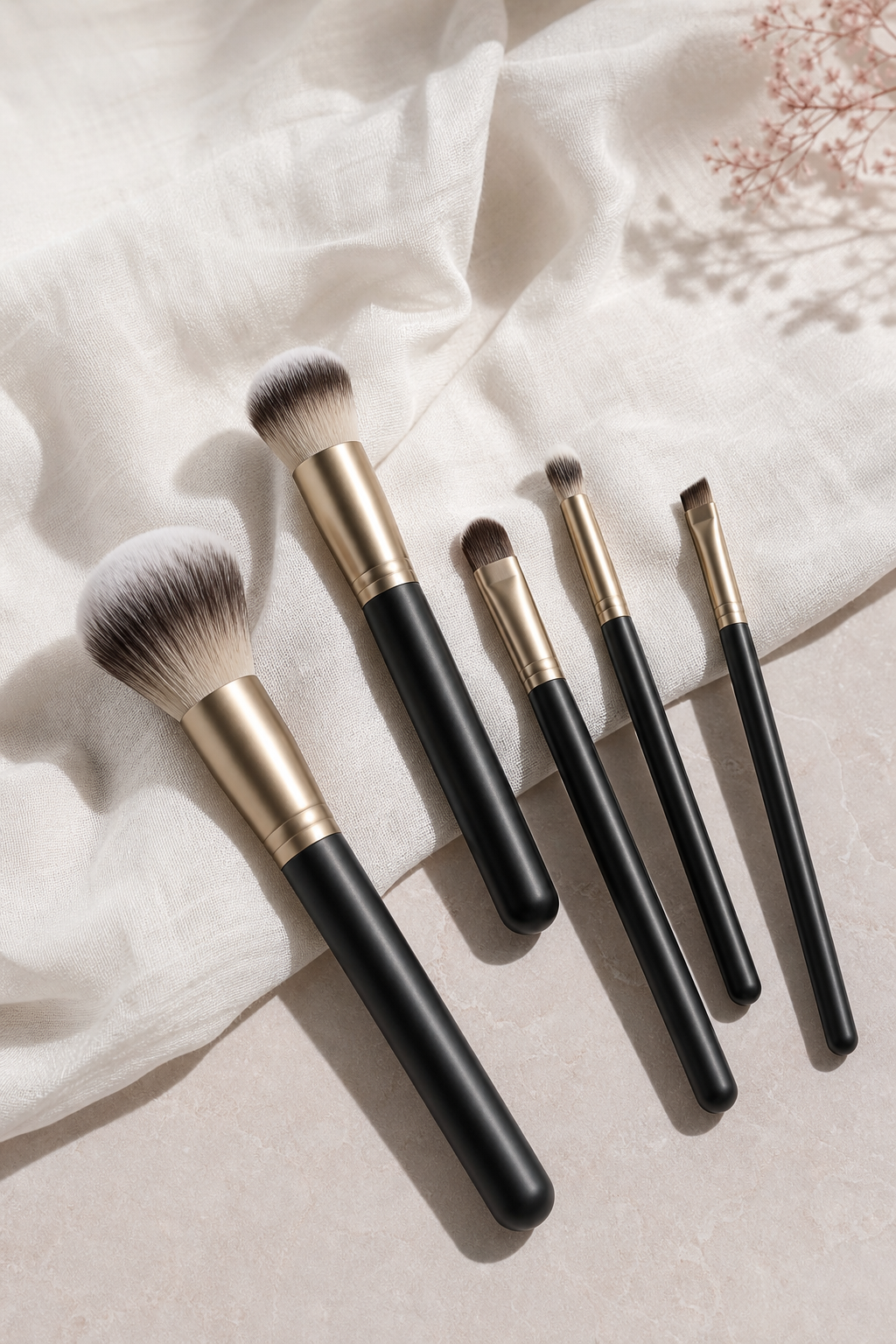
Choose a medium, softly dense brush with a rounded or slightly angled head. It should spread foundation without leaving tracks and still be small enough to work around the nose. Very dense flat brushes deliver coverage quickly, but they can make a sheer formula feel heavier than intended.
The best complexion brush is not necessarily labeled for foundation. If it blends cream bronzer, blush, and base without holding too much product, it is already doing the work of several specialized tools.
Powder and cheeks need different pressure
A loose, tapered powder brush places a thin veil rather than stamping product into the skin. For blush, use a smaller rounded brush that fits the cheek without covering it in one motion. Natural and synthetic fibers can both perform well; softness, shape retention, and ease of cleaning matter more than the mythology around the material.
If you mostly use cream cheek products, the complexion brush can often double as the blush tool. Keep the dedicated cheek brush for powder formulas and the kit becomes even smaller.
Two eye brushes are enough to begin
A flat shader places color on the lid. A small, flexible blending brush softens the edge and can sweep a transition shade through the crease. Together they handle a single shadow, a soft smoky eye, and the ordinary task of making color look intentional.
A tiny angled brush can be the fifth tool if brows or liner are important to you. If not, choose a small pencil brush for detail at the lash line. The fifth brush should solve your personal recurring problem, not complete an abstract set.
Care determines value
Wash brushes with gentle cleanser, rinse thoroughly, reshape, and dry them flat or with bristles angled downward so water does not collect in the ferrule. A modest set cleaned regularly is more useful than a large collection that makes every application muddy.