Use tools to improve technique
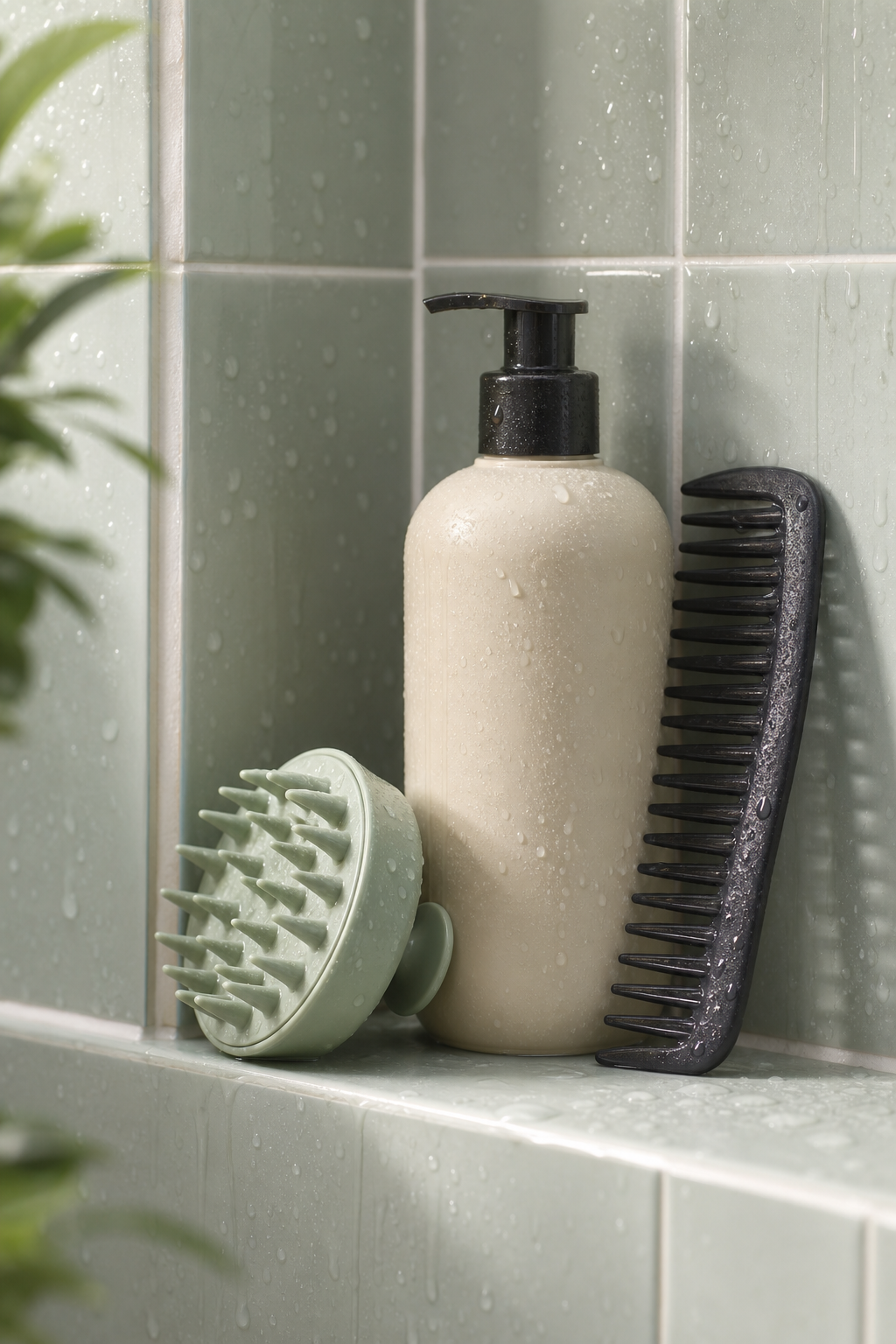
A silicone scalp brush can make shampoo distribution easier, especially through dense hair. The useful motion is small and controlled, not a vigorous scrub. Flexible tips should move across the scalp without tangling lengths or leaving tenderness behind.
Hands work perfectly well too. The brush is valuable only if it helps you reach the crown and back of the head, use less pressure, or turn rushed shampooing into a more complete rinse.
Clarify for a reason
Styling products, dry shampoo, mineral-heavy water, and infrequent washing can leave buildup that a regular wash does not fully remove. An occasional clarifying shampoo may help, but frequency should follow the hair and product load rather than a rigid calendar.
Concentrate shampoo at the scalp and let the rinse move through the lengths. Follow with conditioner where the hair needs it. If clarifying leaves the scalp tight or the ends brittle, use it less often or choose a gentler formula.
Know when shopping is the wrong answer
Persistent itching, sores, sudden shedding, thick scale, or pain should not be managed with increasingly abrasive tools and oils. Those signs can have many causes and deserve assessment from a qualified professional. The scalp is skin, but it is not a place for endless exfoliation experiments.
Fragrance-heavy oils can also complicate sensitivity. If you enjoy a pre-wash oil, keep it on the lengths unless you already know the scalp tolerates it.
The shower shelf
Keep a regular shampoo, an occasional clarifier if needed, a comfortable conditioner, and one soft brush only if it improves your reach. Scalp care works best when it makes washing more thorough and less aggressive at the same time.